

American security policy forced warring nations to lay down their arms. Billions of people have been fed and educated as the American-led trade system spread across the globe.
All of this was artificial. All this was temporary. All this is ending.
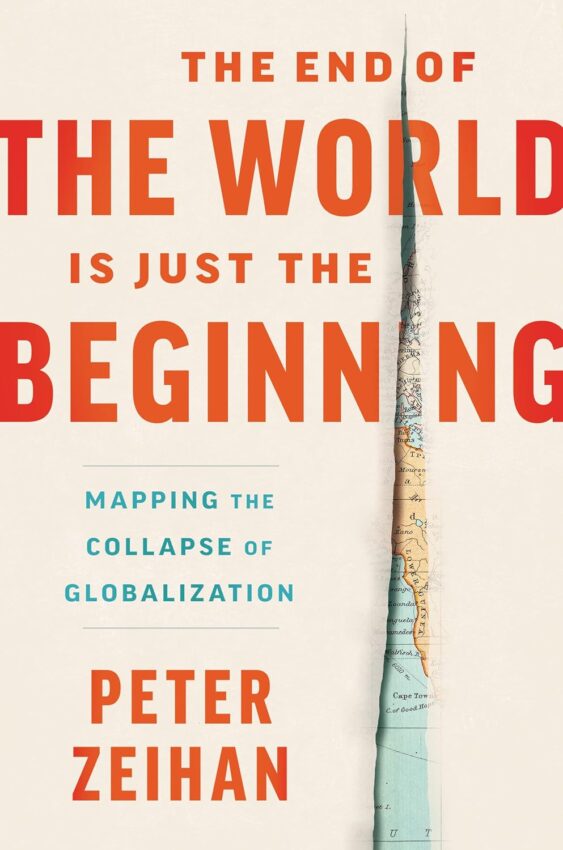
In The End of the World is Just the Beginning, author and geopolitical strategist Peter Zeihan maps out the next world: a world where countries or regions will have no choice but to make their own goods, grow their own food, secure their own energy, fight their own battles, and do it all with populations that are both shrinking and aging.
The list of countries that make it all work is smaller than you think. Which means everything about our interconnected world – from how we manufacture products, to how we grow food, to how we keep the lights on, to how we shuttle stuff about, to how we pay for it all – is about to change.
In customary Zeihan fashion, rather than yelling fire in the geoeconomic theatre, he narrates the accumulation of matchsticks, gasoline, and dynamite in the hands of the oblivious audience, suggesting we might want to call the fire department.
A world ending. A world beginning. Zeihan brings readers along for an illuminating (and a bit terrifying) ride packed with foresight, wit, and his trademark irreverence.

Never Split the Difference: Negotiating As If Your Life Depended On It
$23.99This international bestseller, with more than 3 million copies sold, offers a field-tested approach to high-stakes negotiations—whether in the boardroom, in your community, or at home.